
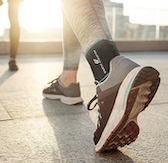
Looking for the best ankle brace for running?
Running is a wonderful form of exercise, offering a range of benefits from improving cardiovascular health to boosting mental well-being.
However, it’s critical to equip oneself with the right gear for safety and performance enhancement. One such option is to wear an ankle brace.
An ankle brace provides necessary support to the ankle, aiding in injury prevention, improving stability and helping you to run pain-free, and avoid a sprained ankle or other injury.
It's especially beneficial to those prone to ankle sprains or runners navigating uneven terrains.
In this blog, we will delve into the world of ankle braces for running, helping you find the best one to keep your stride strong and steady.
How we choose?
If you are a runner and are searching for the best possible ankle brace, look no further!
We have done the research to make sure that whatever your budget may be, we can find an option suitable for you. Whether it's a more affordable version or one with better support specifically tailored towards physical activity—we got you covered!
With our years of expertise in health industries and thousands of user reviews taken into consideration, making an ankle brace purchase is easy, so there’s nothing stopping you from getting back on track as soon as possible.
What to look for in an ankle brace for running
When purchasing an ankle brace for running, several key factors should be considered to ensure you find the most suitable product for your needs.
Support and Stabilization: The primary purpose of an ankle brace is to provide support and stabilize your ankle during running. Look for an ankle brace that offers a balance between firm support and flexibility, allowing for a comfortable range of motion.
Fit and Comfort: Your ankle brace should fit snugly but comfortably for good ankle support. It must not be so tight that it restricts your blood flow. Breathability in the material can also prevent excessive sweating and ensure comfort during long runs.
Durability: The brace should be made of strong, durable materials to withstand regular use and washing. Look for braces made from neoprene or nylon for longevity.
Ease of Use: The brace should be easy to put on and take off. Some ankle braces come with adjustable straps, which can be a huge plus.
Price: While it is essential to find a brace that offers the necessary support and comfort, it's also important to consider your budget. High-end braces often offer additional features but remember that a higher price doesn't always mean better quality.
User reviews: Finally, don't forget to consider the reviews given by people who have purchased an ankle brace before you. They are often looking for similar things to you, and having already purchased it, can give insight into what is good and not so good about the ankle braces you might be searching for.
By paying attention to these aspects, you can ensure that the ankle brace you purchase will serve you well in your running adventures, providing the necessary support and protection to keep you on the move.
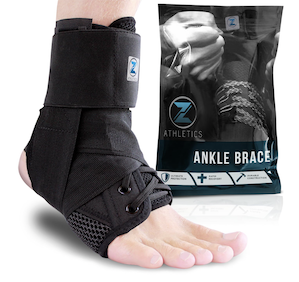
Z ATHLETICS Zenith Ankle Brace
Why I love it
The Zenith Ankle Brace, developed by Z Athletics, embodies a blend of support, breathability, and durability, all tailored with the user in mind.
Fabricated from the highest quality nylon and neoprene, this ankle brace assures you of superior support and breathability.
It has double-stitched seams, ensuring that you won't have to keep buying new braces each month.
This brace will not only prevent injury but is also a remedy to eliminate ankle pain caused by sprains, tendonitis, and other injuries. Its design aims to aid the healing process and prevent sports related injuries and minor mishaps.
The side straps are contoured to immobilize the foot and ankle without curtailing your ability to walk or run.
Regardless of the activity- be it volleyball, basketball, hiking, wrestling, running, or soccer, the Zenith Ankle Brace gives you peace of mind against ankle injury. Unlike an ankle sleeve, this brace allows for adjustments to customize the level of support you desire.
The lace-up front and straps permit you to adjust the tightness, according to your comfort.
What you should know
One colour, Black.
Comes in 3 sizes: Small, Medium and Large.
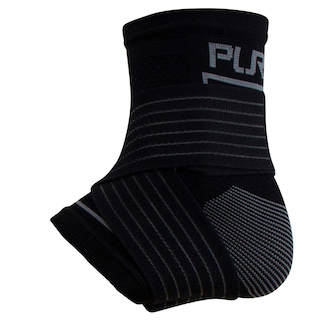
Pure Compression ankle support
Why I love it
The Pure Athlete Ankle Brace offers targeted ankle stabilization, ensuring good support exactly where you need it the most.
Its adjustable strap fastens securely and allows for extra support in the ankle. The brace is designed to fit comfortably in shoes and offers full ankle support without being restrictive, allowing for complete mobility.
Crafted from a special Pure Athlete fabric, this ankle sleeve is moisture-wicking, keeping perspiration at bay while its anti-odour properties prevent unpleasant smells.
It's perfect for athletes across various sports such as tennis, running, and volleyball.
Advanced compression technology offers extra support and a second-skin fit, ensuring the sleeve does not slip or slide around in running shoes.
The compression support helps to prevent injury and also stimulates blood circulation to reduce swelling in the ankle.
What you should know
One colour, Black
Sizes: Small/Medium, and Large/X Large.
Can be sold both as a single sleeve or a pair.
100% satisfaction guarantee.
Please note at checkout if you are purchasing a pair or a single sleeve.
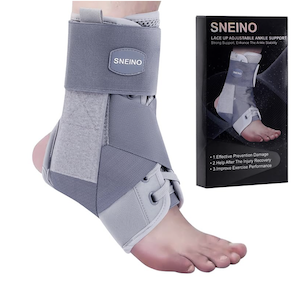
SNEINO Ankle Brace for women and men
Why we love it
The SNEINO Ankle Brace offers a distinct design, offering 360 degrees of support around the ankle for superior stability.
Made from neoprene, this ankle brace is durable, breathable, and quick-drying, ensuring you can comfortably wear it all day long.
To enhance the stability of the brace, there are two spring steels on both sides, and the design also includes two stabilizing straps.
This ankle brace not only helps in the recovery from an injury but also aids in injury prevention.
With reinforced side stabilizers and a curved arch design, the SNEINO Ankle Brace quickly reduces pain and pressure on the ankle.
It can alleviate pain related to Achilles tendinitis, joint pain, and minor sprains, making it an excellent choice for recovery and relief.
Orthopaedic surgeons recommend this ankle stabilizer for its effectiveness.
What you should know
The SNEINO Ankle Brace is designed to suit various foot shapes and sizes with its adjustable lace-up design. Remember, sizing is based on regular shoe sizes, but each brace can be adjusted to fit your needs. If you're in between sizes, choose a smaller size for additional compression or a larger size for reduced compression.
SNEINO offers a lifetime service extended to customers after purchase. If you have any questions, feel free to reach out to them via Amazon.
One colour, Black.
Comes in 4 sizes: Small, Medium, Large, X Large
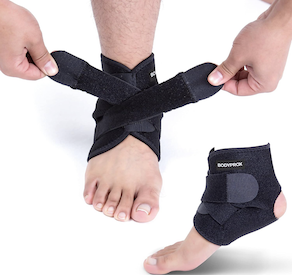
Bodyprox ankle support brace
Why I love it
The Bodyprox Ankle Support Brace is a highly versatile option as it offers a one-size-fits-all design, accommodating up to 11" in feet arch circumference.
This brace is designed to protect the ankle, minimizing injury risk and providing relief and comfort for conditions such as plantar fasciitis. Its open heel design facilitates a wide range of movements during activities while still providing the necessary support for the ankle tendons and joints.
This makes it an ideal choice for a variety of indoor and outdoor sports that might strain the ankles, including running.
Made from breathable neoprene material, the Bodyprox brace retains heat, prevents skin irritation, and boasts flexibility and durability.
By providing the right amount of compression on the tendons, it aids to prevent injuries, and speed up the healing phase if you're recovering from an injury.
What you should know
Comes in one size.
One colour, Black.
It's also washable, adding to its longevity and ease of use.
FAQs
Do ankle braces help when running?
Yes, ankle braces do provide support while running and can be beneficial, especially for those with a history of ankle injuries or instability.
Most studies indicate that braces are somewhat more effective than taping, but both are superior to no support at all.
Interestingly, one study found that simply wearing high-top sneakers instead of low-tops avoided some ankle injuries. Furthermore, high-tops paired with taping resulted in over 50% fewer injuries compared to low-tops with taping.
Therefore, the choice to wear an ankle brace, tape, or wear high-top sneakers might depend on your personal comfort, the level of support you need to prevent injury or guard against further injury, and the type of running or sporting activity you are engaged in.
Is it okay to run with ankle pain?
It's generally not recommended to run when your ankle is causing you pain, as this can exacerbate the injury and prolong recovery time.
If you're experiencing pain, it's best to rest and seek advice from a healthcare professional.
Continuing to run with an ankle injury could lead to more severe injuries such as stress fractures or sprains.
More importantly, it will likely delay your recovery, preventing you from returning to your regular activity levels.
It's always wise to listen to your body and give it the rest it needs to properly heal.
How do I protect my ankle when running?
There are several strategies to protect your ankle while running:
Warm up before any sports activity. This prepares your body for the physical exertion to come, increasing blood flow to the muscles, and improving their flexibility and efficiency. The right warm-up exercises can significantly reduce the risk of sport-related injuries, including ankle strains and sprains.
Condition your muscles for the sport. Strengthening your muscles and enhancing your athletic conditioning through strengthening exercises specific to running can help reduce the load on your ankles, minimizing the risk of injury. Regularly perform calf raises, toe walks, and heel walks to boost lower leg strength.
Choose athletic shoes specifically for your foot type. Everyone's feet are unique and require different types of support. Runners should select shoes that match their gait and foot shape to provide optimal support and reduce the risk of ankle injuries.
Replace athletic shoes when the tread wears out or the heels wear down. Worn-out shoes lose their shock-absorbing abilities, increasing the risk of injuries. A good rule of thumb is to replace shoes every 300-500 miles.
Avoid running or stepping on uneven surfaces. Uneven terrain can easily lead to sprained ankles and unexpected falls. Stick to smooth, flat surfaces when running, especially if you have a history of ankle injuries.
Remember, it's always better to prevent an injury than to treat one!
Can I run with tendonitis in my ankle?
Running with tendonitis in the ankle is a delicate balance and should be approached with caution.
Keep in mind, that some runners may not have to completely stop running, but merely reduce their training load (distance, intensity, frequency) during the rehabilitation process.
It is crucial to listen to your body and avoid pushing through pain. You should be able to bend and straighten your ankle without pain.
Your foot and ankle should not be swollen.
If any of these symptoms persist, it is important to seek medical attention to prevent an ankle sprain or other injury.
Can jogging strengthen your ankles?
Yes, jogging can strengthen your ankles, but it must be supplemented with specific exercises aimed at targeting and fortifying the muscles around the ankles.
Regular running or jogging indeed enhances cardiovascular fitness and overall lower body strength. However, it does not specifically concentrate on the muscles in your ankle.
To truly strengthen your ankles, incorporate exercises such as calf raises, toe walks, and heel walks into your routine. These exercises will help build the muscles around the ankles, provide stability, and decrease the likelihood of a sprain or other injuries.
It's crucial to aim for a balanced fitness regimen that includes both general endurance training like running, and specific strength and flexibility exercises for the ankles.
Why are my ankles so stiff when I run?
Ankle stiffness during or after a run can be attributed to several factors, primarily the enormous force that the feet and ankles absorb with each stride. This can result in a feeling of immobility or limited range of motion in the ankles.
Furthermore, research suggests that the faster your running speed, the higher the chances of experiencing foot and ankle stiffness. This is due to the increased force and stress applied to the ankle joints and the surrounding muscles during a high-speed run.
Therefore, it's paramount to incorporate appropriate warm-up exercises, ankle-strengthening routines, and post-run stretches to mitigate this discomfort, prevent a sprained ankle, and maintain overall ankle health.
This post contains affiliate links and I may earn a small commission when you click on the links at no extra cost to you. As an Amazon Affiliate I earn from qualifying purchases.